Showing posts with label france. Show all posts

Tuesday, September 15, 2015

European Heritage Days September 19-20th, 2015

Each year, many listed and interesting buildings are opened to the public as part of the European Heritage Days or Journée du Patrimoine.  The dates for 2015 are the 19th and 20th of September and the national theme is "The heritage of the 20st century, the history of the future".


On September 19th and 20th more than 17,000 monuments all over the country will open their doors free of charge and offer different types of animations to entertain and educate the general public.  You can obtain details of specific events on your area on your local newspaper and tourist office.

As a family, we usually take advantage of these Journées du Patrimoine to visit the sites in our area.  Through the years, we have visited many sites and there are still many others that we haven't had the time yet to visit.  Most of the time we have been pleasantly surprised at our findings like when we visited Chateau Guillaume a magnificent castle in the near town of Lignac.  Other times, to be truthful, we were less than happy with the place we visited as it was either too small, uninteresting or just not welcoming.  Overall, I can say that this initiative to open monuments free of charge to the general public is fantastic.  We always wait eagerly for the next Journée du Patrimoine.

Chateau Guillaume

If you happen to be in Paris this weekend, for the Heritage Days, Paris’ City Hall (Hôtel de Ville) will exceptionally open its doors to the public. A chance to discover this building and have a look at the mayor’s office for free!


Wednesday, July 8, 2015

Hendaye To Hondarribia Maritime Shuttle


After a week in the French side of the Basque Country I feel renewed.
The Basque country is a place close to my heart, as my ancestors came from there.  For the past few years, I have been taking at least a week a year to visit this wonderful land where you can always find something fun to do regardless of the weather.  And if you are feeling lazy, well, there is no problem neither, why not enjoy a short boat trip and go to the Spanish side of the Basque Country for a tapas dinner and some lazing around.  The trip only costs 1 euro 80 cents per person and lasts about 5 minutes.  During the summer the service is available every 15 minutes until 1am.  So, there is no excuse to skip a trip to the Spanish side to visit the beautiful town of Hondarribia -also known as Fuenterrabía by the Spanish.

Hondarribia / Fuenterrabia seen from Hendaye in France.  

Tuesday, October 28, 2014

Des Clowns Armés Terrorisent des Lycéens.


Armed clowns on the loose?
A few days ago my teenage daughter refused to go out because of rumours of armed clowns terrorizing people on the streets.  At first I thought it was only a joke, a bad joke or even a prank supported by social media.  I was very sad to find out that the rumours were true and France had really been "attacked" by clowns since the start of the month.  As  I started reading more about the subject trying to reassure my daughter, I found that:
 
  • Fourteen teenagers dressed as clowns and carrying pistols, knives and baseball bats were arrested outside a school in Agde, southern France, on Saturday.
  • In Montpellier, a 35-year-old man was beaten with a metal rod on Saturday night by a man dressed as a clown who tried to rob him.
  • A 19-year-old who had dressed as a clown to terrorise children in Douvrin, northern France, was given a six-month suspended prison sentence at a court in Bethune last week.
  • Other arrests have been made - not of clowns, but of "clown-hunters". In Mulhouse, five young people were arrested for "clown-chasing" through the town's streets, armed with baseball bats,  hammers, knuckle-dusters and tear gas.
 
Apparently it all started in the town of Sin-le-Noble on Monday when a girl told police she was chased by an armed person in a clown costume. Next on Tuesday in Lambres-lez-Douai another student said she was attacked by a clown.  Finally on Wednesday in Flers-en-Escrebieux a student said he was threatened by a clown with a knife near a primary school.


I don't know you, but I am really concerned with these facts.  Not the fact that people dressed up as clowns are frightening others, but the fact that a few isolated cases are causing such a stir-up.   A quick look of Twitter shows scores of tweets from youngsters in France on the subject of armed clowns. While there are plenty who point out the whole thing is pretty ridiculous, others are doing the contrary.  It seems that there are even organized  clown hunts and French police have launched a campaign to stop vigilante groups from chasing "evil clowns" from their towns and villages.  In a way, the social media that we are so keen to use is causing panic spreading false information or exaggerating the facts to frighten young people, what it started as a prank is having now an uncontrollable snowball effect. 

Tuesday, May 21, 2013

Are the French Better Parents Than Americans ?


My First experience with the French style of bringing up children
 
I arrived in France when my oldest child was 3 and the youngest one only 10 months old. As soon as we arrived they went to the Garderie which is our local day care centre run by the local council. I remember at the time (2005) we only had to pay about 1,20 euros per hour for both children, plus we had to provide their lunch and nappies for the day. My little ones loved the garderie and not being familiar with the French language did not pose a problem either for them or the carers.
 
The advantages of having a Garderie for my little ones were several, among which the most important were:
 
  • The Price. Being run by the local council, we only had to pay a fraction of the total cost. The price you pay in most local day care centers is decided based on your tax form and your income during the previous year.
  • The children start early to learn how to interact with other children and the importance of sitting and eating properly at a table. More important than everything else probably is that they learn to have a Pause. Whether they slept or not, at the garderie children were put in a bedroom to have a sleep or simply to have a lay down and a calming time on their own. This “Pause” continues to be a rule during all the pre-school years.
  • Freedom of time. Sending my children to the Garderie meant that I could have a whole day free to do whatever I had or wanted to do without feeling guilty or worrying about leaving my children with someone else.
  • First contact with the French language and culture. My children went to the Garderie without speaking a word of French and much to my surprise, in a few weeks they were already speaking French.


I can say that the secret behind having well behaved children is based on the fact that:
 
 
  •   French parents are not afraid to show their authority
  •   French parents do not spoil their children
  •   French Mothers say NO
  •  French parents let their children be children
  •  French mothers have FREE time
  •  French Parents enforce rules that affect their own pleasure
  •  French parents teach their children to eat well rounded meals


Thursday, November 15, 2012

Beaujolais nouveau 2012

Despite a very low harvest due to the weather, the famous Beaujolais wine is expected today Thursday 15th on the tables. The harvest in Beaujolais this year has been perhaps the lowest production in 10 years as a result of the poor spring weather. However, producers have insisted that the small grapes of this year mean concentrated flavour, thus more complex 2012 wines.  
 
True connoisseurs and simple enthusiasts are all eagerly waiting to taste and criticize the Beaujolais nouveau 2012.  


Why is the Beaujolais nouveau so awaited for?
The appointment is taken each year the third Thursday of the month of November. This date is indeed marks the end of the winemaking and start of the marketing of this wine. While previously no wine could  be sold prior to December 15, several wine-growing unions have lobbied so that some of them can be released before this date. Thus was born the "Beaujolais nouveau" name in 1951. Then, the exact date of authorization was set in 1985 at the third Thursday of November for practical reasons: not too close to the weekend or on 11 November. Since then, every year on this date, red wine lovers flock to celebrate and enjoy the vintage of the year.


What makes a good Beaujolais? 

The Beaujolais is a young wine.  A  good Beaujolais would be made from a natural yeast. 


How much does it cost a bottle of Beaujolaisnouveau?
 
The Beaujolais is a wine averagely priced between 4 and 9 euros.


The Beaujolais in Numbers:

  • In France, the three regions that consume the most of this wine are the Paris region with 9 800 hl (1.3 million bottles), Eastern region (7 400 hl or 990 000 bottles) and Central - East (6465 hl or 862 000 bottles).
  • Internationally it is Japan, North America and Germany the countries that consume the largest quantities of Beaujolais.


Wednesday, August 8, 2012

Tax changes in France to affect foreign homeowners.


France’s new government has announced tax raises, targeting wealthy households, worth 7.2 billion euros.  The new changes will be retroactive and will affect non-resident second home owners in France, as well as French expats who live abroad but still own a property here.


The major changes that will affect foreign homeowners and French expats are:

  • Increase of capital gains tax from 19% to 34.5%. 
  • Increase of Taxation on Rental income from 20% to 35.5%


The tax on rental income is retrospective and will be applied from the 1st of January 2012 while the increase of capital gains tax will take effect from August 2012.


However, if you already live in France and pay your taxes here, nothing changes for you.  Meaning that if you already have rental income from a furnished property (for example, a gite) then you will not be affected by the increase in taxes. 


Also, if your French house is your main residence you will not be affected by the rise on capital gains tax; and remember that after 30 years of owning a house you are not due any capital gains tax neither. 

For more details about taxes in France including some useful Vocabulary you can read my article Tax in France on Hubpages. 

Thursday, November 24, 2011

Hunting in France

My hunting experience in pictures:

Getting ready to go out


l
on our way

looks like the dogs found something

My first shoot

that was sore!


Tuesday, November 15, 2011

How to choose a wine glass

Coming to live in France some people can feel a bit intimidated when it comes to choosing a wine for a dinner or even when choosing a glass for serving the chosen wine.  Living in France, I discovered that wine is a very important part of everyday life and French culture. 


If like me, when I just arrived here, you are wondering what type of glass you should present at your table for your chosen wine; I can give you a few hints to avoid a mayor faux pas. 


Most wine connoisseurs agree that a wine glass should be made of crystal.  The transparent crystal should be thin and without too much ornament in order to let the wine lover appreciate the contents of the glass in all its senses.  In some parts of rural France you will see short Champagne-shaped glasses in porcelain; these are meant to be for coffee, NOT for wine.  To be on the safe side, make sure your wine glasses are of transparent crystal. 


A wine glass should have a stand for easy manipulation when wine tasting.  I have seen wine glasses with no stands, I suggest you don’t try to be too avant-garde and avoid those glasses, at least when you are in France.     


White wines are easier to accommodate to any shape of glass due to their qualities.  Red wines can be more complicated depending on their body.  In France different regions have created special wine glasses for their wines.  The most popular are:

  • The wide “ballooned” wine glass for wines from the Bourgogne region, because the wine from Bourgogne should “roll” freely in the glass to be tasted at its best. 
  • The smallish wine glass shaped as an egg, for wines from the Bordeaux region.
  • Very tall wine glasses come from the Alsace region.
  • Flutes are reserved for the Champagne region.


How to choose a wine glass


    An advantage of knowing what type of glass goes with which wine is that if you are served a glass of wine without seeing the bottle, you can at least start locating the wine as being a Bourgogne or Bordeaux. 


    Remember that a wine glass should never be filled all the way up.  The ideal is to fill it up a little bit more than half the way, that is, leaving a third of the glass empty to leave space for the wine to develop. 

    My selection of best wine gifts under $25 for wine lovers

    Monday, October 24, 2011

    Fun things to do with Children at Royan

    Fun things to do with Children at Royan

    Royan is one of my favourite places in the French Atlantic coast.  Every time I can, I pack up a few things, get my little ones ready and we go there for a few days.  It is a great place to visit with children as there is always something for them to do.  Even when it is cloudy or rainy we can just have an afternoon at the cinema or visit a museum or exposition.  

    However, during sunny summer and spring days, we like to go to the Jardins du Monde, a beautiful park not far from the town centre with lots to offer to curious children and adults.  


    Visit the Jardins du Monde

    The Jardins du Monde is a beautiful park where you will find:

    • A dwarf goat’s farm: My little ones loved this, I couldn’t get them away from caressing and playing with the dwarf goats.

    • An Orchids tropical greenhouse, the Japanese gardens, the English garden, etc. Enjoy the 18 acres of exotic gardens!

    • A water spring esplanade with fountains spouting randomly, ideal to refresh your little ones during a hot day.

    • A pedal go cart track

    • A live butterfly hot house where exotic butterflies flutter among the visitors.

    • The Bouncy village: a fun area with giant slides, bouncy castles, trampolines and adventure tracks to amuse children and parents alike.

    • Do not miss the bamboo maze.

    • For older children there are remote controlled boats and electric boats trips through the marshes and the park waters.

    At night time, when you leave your little ones at home or the hotel you can come back to the Jardins du Monde and enjoy the party at the Butterfly bar, an open bar in the heart of the Jardins du Monde park, open every night during July and August and during the weekends on May and June.

    For more things to do in Royan you can check my Family holidays in France article on HubPages.

    Thursday, August 4, 2011

    The French Countryside

    The French regions offer visitors a diversity of landscapes that’s unrivalled in Europe. Add to it the abundant fauna and flora, the high quality of their cultural and historical heritage, and you will easily understand why France remains a favourite tourist destination in the world.

    Hiking, biking, horse riding, paragliding, hot-air balloons or camper vans, all means of transport are suitable for exploring France!


    Friday, November 19, 2010

    The Beaujolais Nouveau

     
    The wine we were all waiting for...
    Finally the 18th of November arrived, the day when corks pop around the world as lovers of Beaujolais nouveau mark the start of a new French vintage by enjoying large amounts of the popular drink.

    At one past midnight on the third Thursday of every November over a million cases of Beaujolais Nouveau start their journey from little villages through a sleeping France to Paris for immediate shipping to all over the world.  For a few short days, banners everywhere proclaim “Le Beaujolais Nouveau est arrive”

    Once a local tradition, has now become an international race to bring the Beaujolais Nouveau to markets all over the world.  When you read this more than 65 million bottles representing nearly half the region’s total production, will have been distributed and drunk around the world.


    What is so special about the Beaujolais Nouveau?
    When the tradition started, the wine producers of the area created a “wine of the year” to celebrate the end of the harvest.  The wine was only fermented for a few weeks, as was meant for immediate consumption.  But then just before the Second World War it was established an AOC for the Beaujolais Nouveau and the release date for the Beaujolais Nouveau became fixed each year. 

    With time, wine producers began to see the marketing potential of the Beaujolais Nouveau and by the 1970s its release and the race to get the first bottles to Paris became a national event.  The race to deliver the first bottles soon spread all over the country and to other European countries.  In the 1990s the race extended to Asia and North America.  The race to deliver the first bottles is so tight that one year even a Concorde was used to deliver the Beaujolais Nouveau. 

    Is a Beaujolais Nouveau “that” especial? 
    Not really...  Many people agree that the Beaujolais Nouveau comes from the region’s worst vineyards; a wine barely removed from the fermentation vat; a wine that is just pleasantly tart. 

    However, I still run to my nearest wine provider yesterday to be able to get a few bottles of the Beaujolais Nouveau 2010.  I was a week late last year and I couldn’t find a bottle of Beaujolais Nouveau left in my local wine provider’s cave.  I didn’t make that mistake this year, I was there right on the spot the 18th of November, I had a try at several bottles and came out triumphantly with my load of Beaujolais Nouveau ready for this weekend degustation party.


    I find that it is not much about the taste but more about the game.  I am sure plenty of us will still enjoy getting caught up in the ritual.   It is always fun to meet at the local restaurants and bars to try a glass of Beaujolais Nouveau with friends.  Cheers! 


    Wine: its therapeutical uses:


    Wine has been used to relieve conditions such as anaemia, hypertension, hypotension, rheumatism, gout, obesity, dyspepsia among many other things. Unlike modern medical advice, the French used to drink wine even during pregnancy due to the richness in minerals of certain wines such us the rouges from Bordeaux.

    You can learn more about wine's therapeutical uses here.

    Monday, September 27, 2010

    Laser eye surgery in France


    France has excellent medical care and the World Health Organisation rated it as number 1 out of the 196 countries it accredited. If you are considering having laser eye surgery in France, then many of the same rules that apply in the UK also apply in France. As is the same in the UK, there are 2 main types of laser eye surgery and they are Lasik and Lasek (also called PRK). 

    Lasik is likely to be your first choice as the recovery period is quicker and more comfortable. As well as this, you will be offered two additional treatment options which are:
    • Intralase  and 
    • Wavefront (also called custom-laser eye surgery). 

    Intralase is a type of Lasik and it has slightly fewer complications. It is also a bladeless procedure which appeals to the more squeamish people amongst us! 

    The following are things you should consider when choosing your clinic and surgeon:

    • Ensure your surgeon is a qualified surgeon who had undergone the full 11 years training.
    • Ensure your surgeon is registered with the French Medical Council.
    • Check your surgeon has a low complication rate. Complication rates should be less than 1%.
    • Check to see what percentage of the surgeon’s patients achieve 20:20 vision. The higher the better and you should expect it to be over 90%.
    • Make sure you have a good rapport with your surgeon and that you feel comfortable with them carrying out your treatment. You need to be able to ask them questions if you are unsure or uncomfortable about any part of the procedure.
    • Depending on the size of the clinic, your laser eye surgery consultation may or may not be carried out by the actual surgeon. If you are considering a smaller independent clinic then you are more likely to be seen by the actual surgeon. The larger multiple chains often employ an optician to do your initial checks.
    • Check you clinic is fully accredited by the Autorité de Santé (French Health Authority).

     If you are a Brit living in France then you may feel more comfortable using a clinic that was founded in the UK. Optical express are a company that you could consider as they have clinics throughout France and the rest of Europe. The most important thing when it comes to choosing where to have laser eye surgery is to go with your instinct. If it feels like the right clinic and surgeon for you then the chances are it is! 

    If you would like to read more about laser eye surgery you could visit Treatmentsaver.com

    If you would like to know more about Laser eye surgery you can read this interview with an optometrist and specialist in laser eye surgery to have all your questions about laser eye surgery answered. 


    Tuesday, July 20, 2010

    Living in France, an Interview with gite owner Brian.


    This is the first of a series of interviews that I’ll be having with foreigners living in France.  I want to give you a hint of what it is really like for a foreigner to live in France on a day to day basis.  For this purpose I have gathered a few friend writers from HubPages who have agreed to let us have an insight into their life in France.

    For the first interview I invited Brian who bought a lovely former watermill in France and turned it into a gite, Le Moulin de L’Argentouire, A spacious and comfortable gite situated in the Aude region of Languedoc-Roussillon in the South of France, midway between Carcassonne and Toulouse.  The perfect destination for an action packed holiday or simply a relaxing vacation.  


    How long have you been living in France Brian?
    We first bought our house in the Easter of 2007 and moved into it permanently in March 2008. So doing the math it means we will have been here living for 2 years in March 2010.

    What inspired you to come to France?  Why France rather than an English speaking country?
    If I am honest when I first thought about coming to France it was with a view of getting a job with Airbus and living close to Toulouse. We probably first thought about doing this about seven years ago when I read an article in a magazine about Toulouse describing the industry of the area and everything else Toulouse had to offer. I worked for a technology company that had a lot of synergy with the aerospace industry and at the time there were quite a few jobs available for English speaking ex-pats. That all changed rather rapidly and the jobs available with Airbus suddenly disappeared, causing us to re-think our options. 

    Both my wife and I had a long term desire to work and live abroad and my wife was very interested in running a bed & breakfast or self catering business. So that became the focus of our attention and with the property prices in France it seemed to us that we should be able to find a property that was large enough to offer part as holiday accommodation and retain part as our accommodation. It was certainly more feasible than buying a property in the UK for a similar arrangement or many other places for that matter. So adding up all that France had to offer, affordable property, Mediterranean climate, mountains, skiing, proximity to the UK for family and a potential business that could be set up to provide a basic income, the fact we didn’t really speak French seemed to be a compromise worth making. 

    Add to that, many holidays spent and enjoyed in France from teenage years to the current time; then it really did become a question of ‘pourquoi pas’, why not indeed. Lets face it when you get older then you do not want to be asking yourself too many of those ‘what if’ questions. Life is about living and taking reasonable risks and yes it was and still is a risk.

    Does the dream match reality?  Did you find in France what you were expecting?
    Good question, honestly, no dream matches reality there are some days when I would happily go back to my mother country. But there are many more days when I have to pinch myself to remind me about what I live in and where I live. France is a truly beautiful country with a history and culture to match our own; the days I do think I would like to go back to my own country are nearly always related to the frustration of not speaking French fluently. I would just love to be able to have a proper conversation with the French people we meet, who are nearly always friendly, helpful and welcoming. I think properly integrating into the community would be much more easily achieved for French speakers.

     What is it that you like the most about living in France?
    The diversity of the environment, I can be in the mountains skiing in an hour and a half, likewise I can be on the Mediterranean coastline, even closer we have amazing countryside, scenery and views. The cities are also absolutely amazing, Carcassonne, Toulouse, Montpellier, Beziers, Narbonne  all have architecture that has to be seen to be believed and a history that underpins everything that has formed the character of the places and the people.

    If you want to find more reasons why living in France is a dream come true don’t forget to check Brian’s article on Moving to France

     What has been so far your worst experience living in France?
    Not sure I have anything that I could report as a worst experience, I got pretty ticked off once when I bought a chainsaw that seized within a couple of months and I was told I hadn’t put oil in the fuel so the warranty would not be honored. Now I know I put oil in the fuel and argued my case vehemently, but to no avail. So having paid a small fortune for the saw in the first place I then had to pay a small fortune for the repair because apparently the damage was my fault; now there is no way a retailer in the UK would have got away with that one, I would just have blinded them with my technical knowledge (English of course). But all in all still pretty trivial and I guess I am over it now, well nearly.
      

    What advice would you give to any foreigners who want to come and start a new life in France?
    Just to be sure they want to do it really, and understand that there will be some fairly serious challenges and obstacles to overcome e.g getting a job if you don’t speak French. Learning the language is a must, just to be able to function normally, and if anyone is really not sure they want to make the move, then they would be wise to think long and hard before committing; especially if they are leaving friends and family behind. That said if you are truly committed and sure you want to do it, then you will cope with the challenges and obstacles and you will realise that the reward of a life in the France Lane was worth the effort. 


    If you want to be guided by Brian in how to by a property in France, you can read his article How do you actually buy a house in France 


    You too can start making money now writing for HubPages, Publish your insights and expertise online with easy-to-use, non-techie tools.  It is easy to sign in  and get started publishing and earning money.  

    Friday, July 16, 2010

    La Palmyre zoo

    La Palmyre zoo  A French Zoo

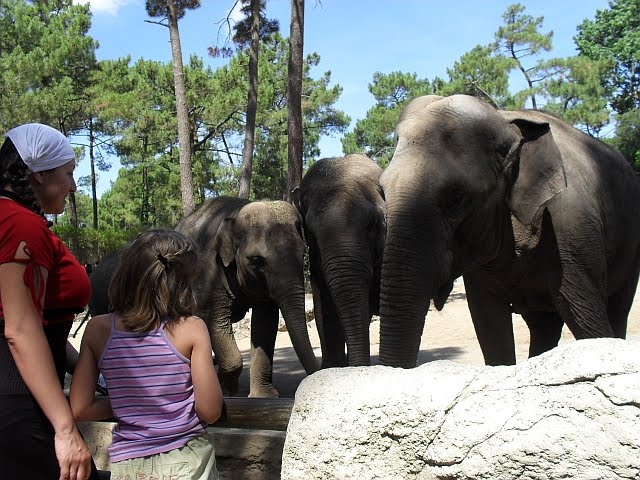
    Looking for entertaining and educative attractions, my latest discovery has been a Zoo located in the heart of the wild Côte de Beauté and the beaches of the Charente Maritime, not far from one of my favourite holidays destinations in the Atlantic coast, Royan; it is one of the best known zoos in Europe: The Palmyre Zoo.


    The Palmyre zoo houses around 1600 animals from all over the world, all living comfortably in the same environment. And to prove the success of the Palmyre zoo as a zoological park every year this zoo registers between 200 and 300 births, an astoundingly successful birth rate for a zoo.

    This are some of the pictures from a fantastic day at the Palmyre zoo


    Tuesday, June 8, 2010

    Aromatic Gourmet Oils

    I live in Central France, in what is known by the French as the Campagne Berrichone, meaning the Berry countryside, or as Parisians would say « the middle of nowhere, the land that time forgot”.
    It is true that living in the countryside can be rather basic but that is one of the things that I love about living here. Waking up in the morning to pick up some fresh raspberries from the garden for a hearty raspberry smoothy, or popping round to see the next door neighbour to get some fresh honey that is just being extracted from their own bee hives, are some of the gastronomic delights of living in the countryside.

    Over here, most people have their own vegetable garden and we are used to eating seasonally. Do not be surprised if you come here at lunch time and the restaurant’s waiters cannot tell you what is on the menu for the day because they are waiting for the head cook to come back from the local market with whatever fresh produce inspired him that day.


    As I said, most people have their own vegetable garden or potager and often they end up with surplus vegetables that they have learned to keep in the form of richly flavoured conserves prepared either with oil or vinegar. I am not talking about ordinary oils or vinegars here. I am talking about vinegars and oils flavoured with anything from rose petals, herbs and fruits to hot chilli peppers. You would be amazed at the variety of oils and vinegars that you can find for sale, and even more at the creations that the locals make according to their seasonal ingredients and refined taste.
    Here you will find some Aromatic Gourmet Oil recipes to tickle your taste buds.

    Friday, May 14, 2010

    France travel information: Hubtrails Capstone


    France is my favourite country in the world. Here I have found most of the things I ever wanted: great cheeses, delicious food, good wine, awesome scenery, a good education system, a helpful health care system charming men, outstanding architecture, history and much more.

    Here in France travel information: Hubtrails Capstone I have gathered the best articles in HubPages about France. They are written by people who have either visited France, or like me, people who overtime fell madly in love with France and moved here to follow their love affair. They call us Francophiles, I call us bonne viveurs...


    Tuesday, January 26, 2010

    Skiing in the Auvergne

    Friday 22nd January

    Last week I went to ski with friends for a few days in the Auvergne.  We choose the skiing resort of Le Lioran in the Cantal Mountains or as the French call it, the Massif Cantalien.

    We left for the Auvergne at 9am. We were a caravan of 3 cars with a total of 12 people. This was my first time stopping to ski in the Auvergne. After a 3 hour trip mostly on motorway, we arrived at our destination, Le Lioran.


    Le Lioran is a family winter resort in the heart of the Cantal mountains. To get there after you leave the motorway you need to take small roads and pass through picturesque little villages. We arrived at Le Lioran at midday, and headed straight for the first decent restaurant we saw. After a kir (white wine and liquor de cassis) we had one of the specialities of the region, Auvergne ham with truffade.
    The truffade is basically potatoes cooked in the pan with onions, once ready you add tomme cheese and cream. Of course the main course was followed by some regional cheeses, dessert and coffee.
    Truffade with ham.


    We spend the afternoon skiing until dawn when we decided to go on a cheese hunt. One of our friends knew a cheese farm and promised to take us there to see how the cheeses were made. We drove through the Cantal mountains, climbed up snowy roads and just made it down sloppy ice roads for about two hours, we saw foxes, snow and more snow, but we never found the cheese farm! Disappointed we return to our rented chalet without cheese. Later that night we went out again, this time for dinner. We had booked in a little family restaurant where we had enjoyed some hot mulled wine earlier during the day. The dinner was delicious, some of us had a raclette and the others a foundue. Both dishes are made with cheese. The raclette is basically a piece of cheese which is heated on a special apparel, the “raclette”. The melted cheese is then poured over potatoes and hams. The fondue is melted cheese with white wine; it is served in a little pan with a source of constant heat to keep the cheese runny. To eat a cheese fondue you use special sticks to grab old pieces of bread and dip it in the cheese. The dinner was delicious, followed by baked apples in caramel sauce and a glass of calvados.
    Raclette


     Fondue